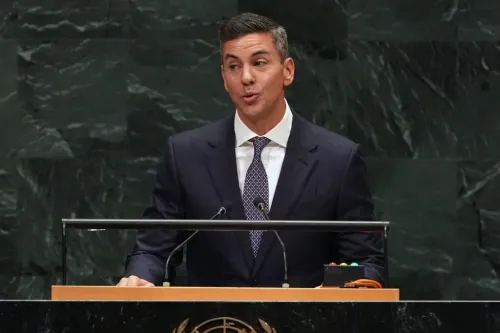
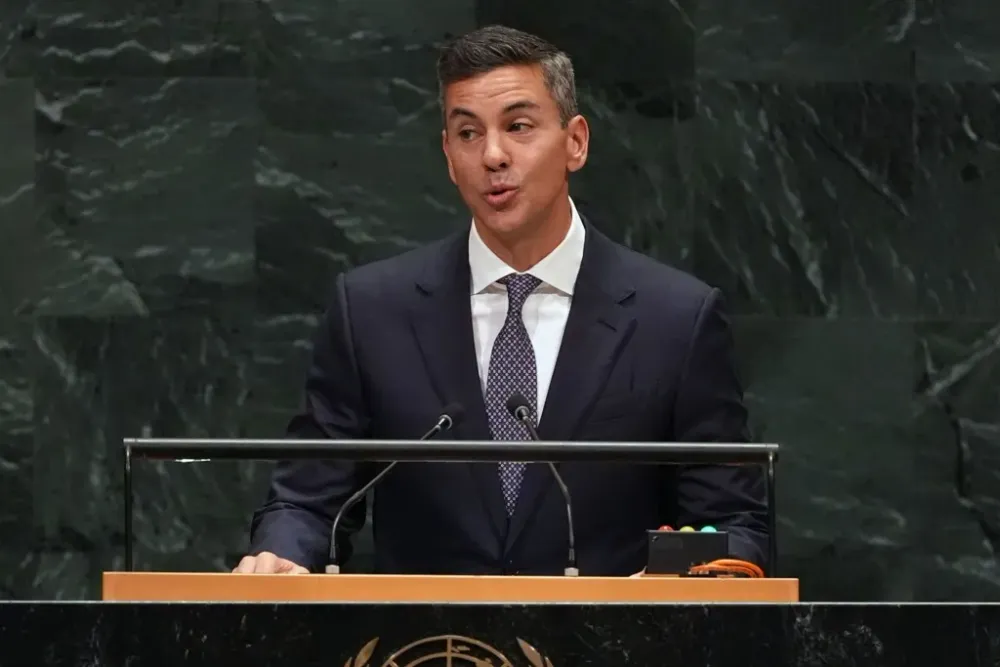
Congress faces resignation and impeachment decisions
Congress must decide whether to accept Peña's resignation under Paraguay's Constitution. Vice President Pedro Alliana is next in line to take office.
A separate effort to remove Peña also advanced on Nov. 5, 2026, when the Chamber of Deputies voted 78-0 to approve impeachment charges. The Senate must now sit as an impeachment tribunal, with a two-thirds majority needed to convict and formally remove him. Deputies rejected a separate impeachment effort against Alliana.
Peña told viewers that his priority was restoring calm for Paraguayans who had entrusted their savings to the financial system. He said his greatest wish was to guarantee the payout of their money and asked the public to forgive him if he had made any mistakes.
The 47-year-old former International Monetary Fund economist began a five-year presidential term in August 2023. His resignation comes just over three years into that term.
Frozen accounts and plans to repay depositors
The central bank began resolution proceedings after Ueno's equity ratio dropped below half the required minimum. Customers temporarily lost access to their accounts, and protesters took to the streets of Asunción.
Ueno, one of Paraguay's largest banks, reported 2.8 million customers in the first quarter of 2026, equivalent to roughly 60% of the country's adult population. The frozen accounts also handled pension payments.
Eligible depositors were scheduled to begin receiving reimbursements from Paraguay's Deposit Guarantee Fund on Nov. 5. The initial payments, to be completed within five business days, cover up to 40 monthly minimum wages per depositor: 121.76 million guaraníes, or about $18,700. The full guarantee is capped at 75 monthly minimum wages, approximately $37,000, per depositor.
Public institutions also had substantial funds at Ueno. The bank reported roughly $800 million in public-sector deposits as of October 2026, accounting for about a quarter of all its deposits. That money included funds from the state pension and health fund and the operators of Paraguay's giant hydroelectric dams. The Social Security Institute, known as IPS, had $355 million deposited there, about 9% of its investments.
Business ties and criminal charges
Peña's past investment in Ueno's parent company became a focus of criticism. He retained a stake until March 2025 and had denied allegations of possible conflicts of interest. The opposition sought the impeachment proceedings against him.
Conflict-of-interest allegations also preceded the departure of central bank chief Carlos Carvallo, who had previously held a senior role at Ueno. He resigned at Peña's request, and Pedro Acosta Bernal was named interim central bank president on Nov. 4, 2026.
Authorities detained eight of Ueno's senior executives, among them founder Miguel Vázquez and bank president Juan Manuel Gustale. Prosecutors also brought charges against 27 bank officials and business associates, alleging offenses including breach of trust and attempted fraud.
Regulator and investor assessments
The central bank said Ueno's problems did not amount to a systemic banking crisis.
JPMorgan nevertheless flagged the bank's collapse as an additional risk to Paraguay's sovereign debt in a Nov. 3, 2026 report. The firm kept its recommendation to underweight Paraguay's U.S. dollar-denominated sovereign bonds.