Earnings improve, but restructuring costs weigh
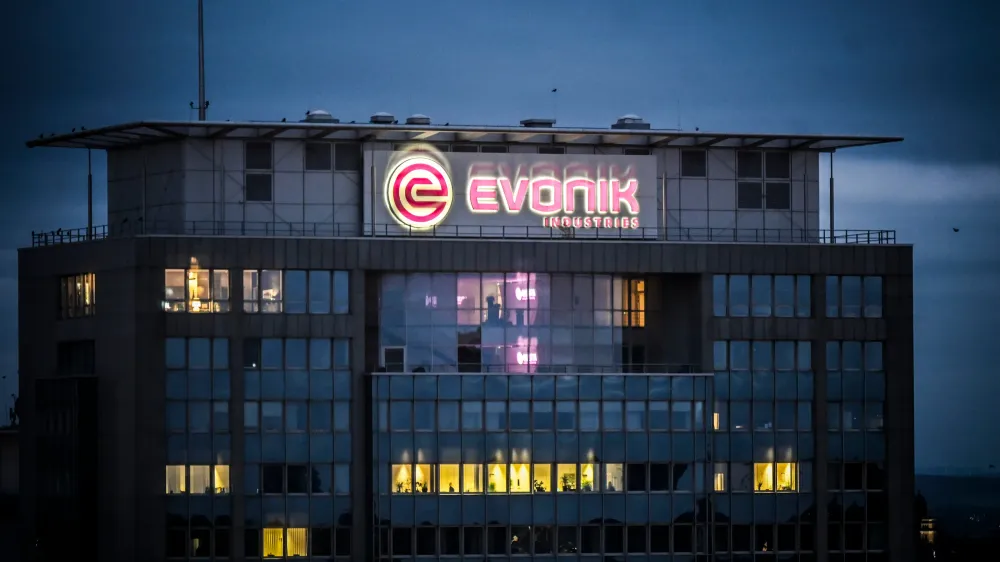
Evonik reported third-quarter adjusted EBITDA of €629 million on Tuesday, up 40 percent from a year earlier. Revenue increased 13 percent to €3.8 billion, matching the estimate in a Vara analyst survey. Adjusted EBITDA was slightly below the survey's €633 million forecast.
The company still recorded a net loss of €53 million as special items and savings-program costs weighed on results. That compared with a €106 million loss a year earlier. Interim CEO Claus Rettig, who is restructuring the group and cutting jobs to restore profitability, described Evonik as strong and robust.
Having raised its 2026 outlook in June, Evonik now expects adjusted EBITDA in the upper half of its €2 billion to €2.2 billion range.
According to Handelsblatt, the Middle East crisis has created supply bottlenecks for Asian competitors that are benefiting Evonik. Uncertainty over possible supply interruptions caused by problems in the Strait of Hormuz is also boosting demand.
A higher offer, but no negotiations
Evonik has rejected BASF's €24-per-share offer. BASF had increased its bid after Evonik's management board dismissed an initial proposal as too low, according to an October 28, 2026, Reuters report carried by MarketScreener. The revised bid values the Essen-based company at more than €11 billion.
The offer is about 39 percent above Evonik's closing share price before the takeover plans became public. Evonik shares were trading at just under €21 when it rejected the bid, FAZ reported on October 30.
Although Evonik's board declined to negotiate over the improved offer, it said it would accept a confidential exchange solely to share information: BASF could explain its motives, and Evonik could outline its position. BASF acknowledged that willingness to talk. Evonik is also considering US rival Ashland as an acquisition target.
Evonik's largest shareholder by far is RAG-Stiftung, which holds just under 44 percent, according to FAZ. The foundation manages roughly €16 billion in assets and finances the continuing obligations from hard-coal mining in the Ruhr region and Saarland, at an annual cost of around €300 million.
BASF offers assurances on jobs and sites
BASF CEO Markus Kamieth has sought to address takeover concerns with commitments on employment and operations. According to FAZ, he pledged to uphold all site agreements, including the protection against compulsory layoffs through 2032, and to leave existing collective bargaining agreements intact.
Kamieth also promised to strengthen North Rhine-Westphalia as a research location. BASF would retain the company that operates the Wesseling and Marl chemical parks, contrary to Evonik's own plan.
The companies' businesses overlap in segments accounting for less than a quarter of Evonik's operations, FAZ reported. Evonik intends to divest its C4 chemicals business; a spinoff of Oxeno would reduce that overlap further.
BASF raises its own earnings forecast
BASF also benefited during the quarter from higher prices and increased demand linked to the Middle East conflict. Its third-quarter 2026 EBITDA before special items reached €1.64 billion, a 15 percent increase and above analysts' forecast of just under €1.5 billion. Revenue grew 14 percent to just under €16.4 billion.
BASF now forecasts 2026 adjusted earnings of €7.4 billion to €7.8 billion, compared with its previous range of €6.9 billion to €7.7 billion and the prior year's result of €6.6 billion, according to Reuters via MarketScreener.
Kamieth described acquisitions as "an option, not a must" in BASF's strategy and said, "We will not pay inflated prices." He also reaffirmed plans to distribute at least €12 billion to shareholders through 2028.
BASF has cut about 8,600 jobs since January 2024 and is preparing a spinoff of its agricultural unit. Revenue at that business fell almost 20 percent to €1.4 billion in the past quarter amid weak South American demand for crop-protection products. The unit is expected to be ready for an initial public offering by mid-2027.