Route and turnout expectations
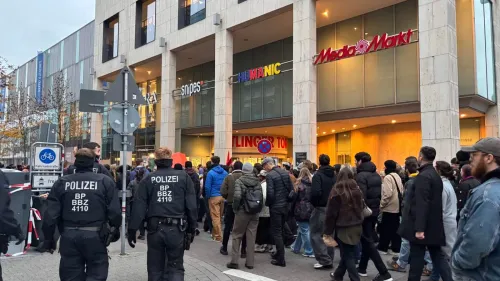
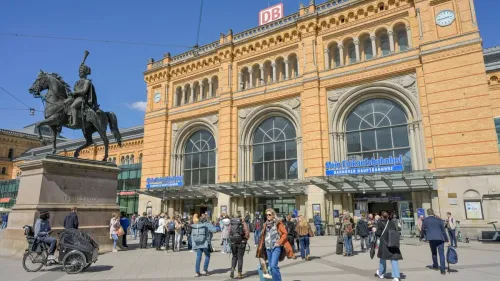
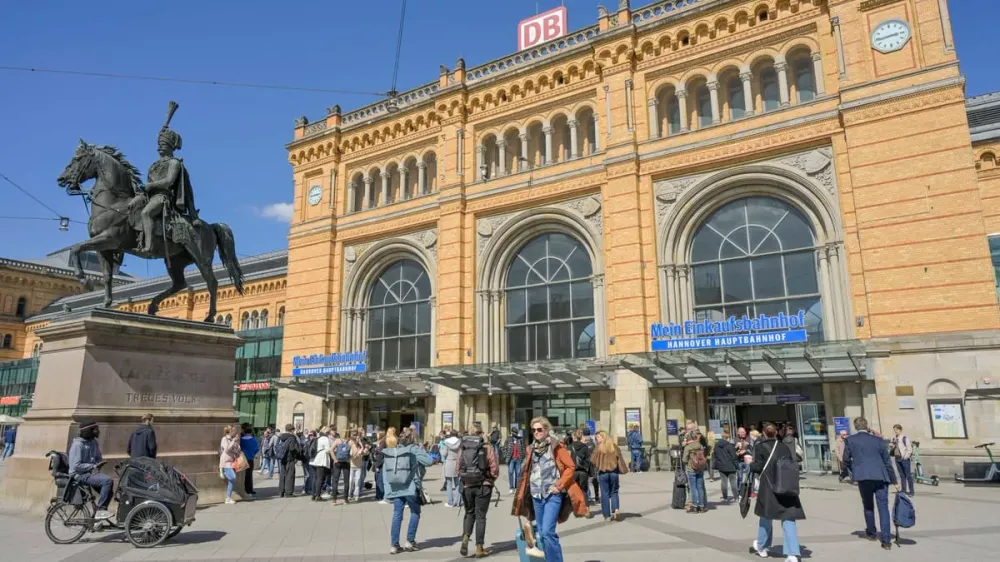
The Hannover event is scheduled to begin with a rally at Ernst-August-Platz before participants march to Klagesmarkt. Police told t-online's regional newsroom that the demonstration is expected to last about two hours.
A private individual registered the march under a banner opposing militarization and social spending cuts. Police said the registrant expected attendance in the high hundreds. A police spokesperson gave NDR Niedersachsen the same estimate from organizers, while the initiative's website reported more than 6,000 registrations for the Hannover protest.
The news agency dpa also reported a demonstration for better education, schools and politics in the city center early Saturday afternoon, with expected attendance in the low thousands. Whether that is the Opernplatz event listed on the initiative's website remains unclear. Police said no assembly connected to these protests was scheduled at Opernplatz.
Police assessments and the Halloween overlap
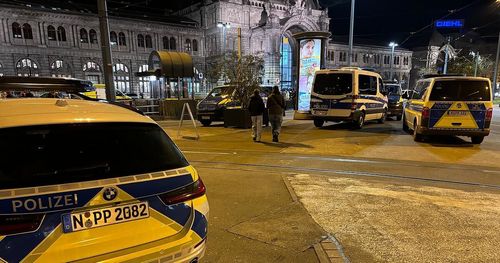
Hannover police said officers would intervene early if specific dangers emerged and take the necessary measures to prevent harm. Attacks on people, property damage and other disturbances would be pursued. Officers are continuing to review social media posts and will try to identify those responsible when they find indications of possible crimes or specific threats.
At the state level, Lower Saxony's Interior Ministry reported no signs that the announced demonstrations posed a significant threat and warned against scaremongering. The state's domestic intelligence service, the Verfassungsschutz, said it had not observed large-scale mobilization by the left-wing extremist scene.
Germany's Federal Ministry of the Interior likewise reported no concrete calls for violence. It said, however, that parts of the left-wing extremist scene and isolated groups from abroad had taken up the protest calls and were helping mobilize participants.
Christian Welzel, a protest researcher at Leuphana University Lüneburg, identified Halloween as a potential complication: people could arrive in masks, making the ban on masking harder to enforce than usual. Lower Saxony's Interior Ministry said police were preparing for a busy day and evening because of Halloween, independently of the demonstrations.
What the movement is demanding
The initiative is protesting deteriorating schools, rising living costs, conscription and the climate crisis. Organizers said protests were planned in 28 German cities on October 31; public broadcaster tagesschau reported that demonstrations were expected in around 30 cities.
Its website sets out six core demands: funding for schools, addiction services and psychotherapy rather than cuts; affordable living; a fair distribution of burdens rather than savings at younger people's expense; opposition to conscription; protection of fundamental rights rather than expanded surveillance; and consistent climate action.
The movement draws inspiration from youth demonstrations elsewhere in Europe. Some protests in France involved violent clashes, but the German initiative explicitly rejects attacks on people, property damage and extremist groups. Its published statement also rules out provocations against police or counterdemonstrators, and its website says collective progress can be achieved only peacefully.
Student groups question the organizers
The movement relies mainly on TikTok, Instagram and Telegram to mobilize supporters and has a loose organizational structure. According to tagesschau, its website's legal notice changed twice within a week and listed a Swiss address by Thursday.
The Bundesschülerkonferenz, or German Federal Student Conference, distanced itself from the October 31 protests because it considered the initiative's organizational structure unclear. Lower Saxony's state student council, the Landesschülerrat Niedersachsen, also withdrew its support, citing a lack of transparency among those responsible and concern that the demonstrations could be appropriated for political purposes.
The movement's federal spokesperson resigned, according to a Süddeutsche Zeitung report cited by tagesschau. In a social media statement, he said the number of actors joining the alliance meant he no longer considered a shared peaceful framework for the protests sufficiently assured.
The German Federal Student Conference announced a separate protest in Berlin for November 20, with teachers and other youth movements also to be invited.