An alliance alongside the WTO
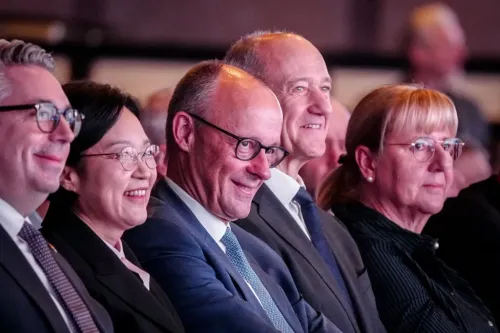
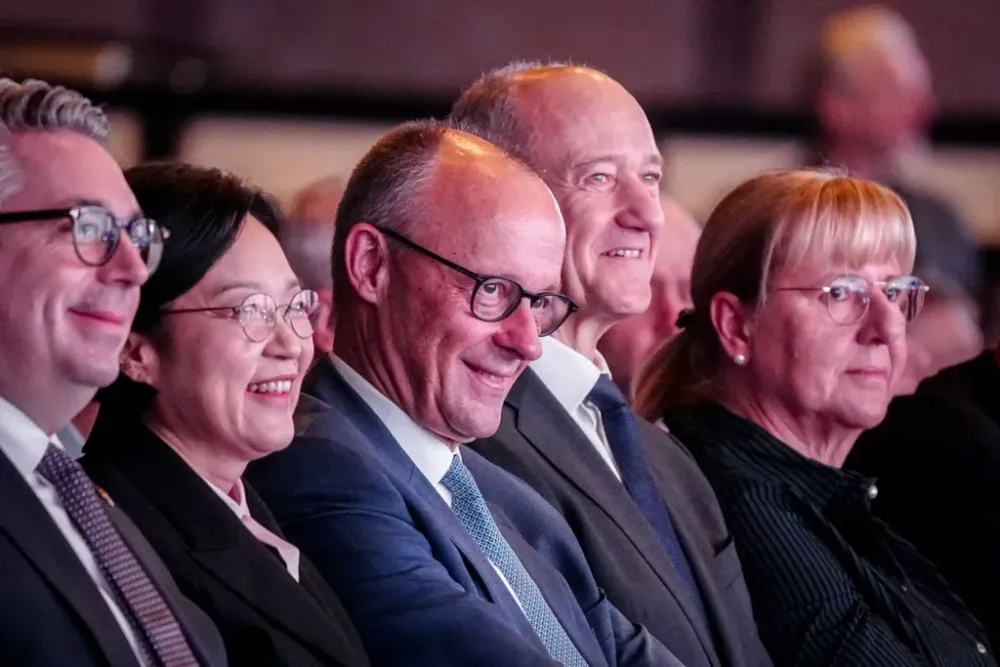
At the opening of the Asia-Pacific Conference of German Business, Merz said geopolitical shifts were drawing like-minded partners closer. He warned that using supply chains for political leverage, restricting access to key technologies and pursuing raw materials as a display of power rather than through fair partnerships threatened growth, prosperity and regional security. China is the main country accused of such practices, PNP reported.
Merz's proposal is for an alliance of countries committed to free world trade that would operate alongside the largely paralyzed World Trade Organization. He also wants to connect the EU's existing free trade agreements and negotiate new agreements with groups such as ASEAN and the Trans-Pacific Partnership.
The Seoul appeal followed similar calls in Singapore and Japan. In Tokyo on October 28, 2026, Merz proposed a global political alliance to defend, strengthen and develop rules-based trade, including the WTO. He pointed out that WTO rules still govern 70 percent of world trade, according to tagesschau.de.
To illustrate the case for cooperation, Merz said that great, small and middle powers acting together would not have to choose between being on the menu and sitting at the table: they could jointly own the restaurant. The metaphor referred to Canadian Prime Minister Mark Carney, who had also proposed an alliance of middle powers in response to the actions of the United States and China.
Business agreements and industrial cooperation
About 1,000 business representatives from Germany and the Indo-Pacific region are attending the 19th Asia-Pacific Conference of German Business, which Merz opened on Friday, October 30, 2026. Numerous corporate agreements are expected to be signed during the visit, particularly involving startups and artificial intelligence.
South Korean Prime Minister Han Seong Sook told the conference that German companies use Korea as a hub for expanding across the Asia-Pacific region. She said international connections were becoming more important as the global economy underwent profound changes.
Han identified battery production, semiconductors and the AI-driven transformation of industrial production as areas where she hoped to deepen cooperation with Germany.
Partnerships in Singapore and Japan
During the Singapore stop, Merz and Prime Minister Lawrence Wong agreed on a work plan to deepen their countries' strategic partnership. It covers the economy, security, digitalization and energy, with new cybersecurity agreements among the planned measures.
In his Singapore Lecture, Merz outlined four principles for German foreign policy in the new geopolitical era: investing in global alliances, building Germany's resilience, supporting the international order, and continuing to pursue dialogue and diplomacy.
Responding to that speech, Chinese Foreign Ministry spokesman Guo Jiakun said China was determined to cooperate with all parties to preserve the stability and security of global industrial and supply chains.
In Japan, Merz met Prime Minister Sanae Takaichi, bringing together the governments of the world's third- and fourth-largest economies. Despite the distance between the countries, he described Japan as a neighbor and a partner sharing Germany's values. Takaichi characterized the relationship as a premium partnership.
DMZ visit planned before departure
Before leaving South Korea, Merz was scheduled to visit the Demilitarized Zone on the border with North Korea, according to the German government.
The DMZ runs for 248 kilometers along the 38th parallel and is roughly 4 kilometers wide. Established as a buffer zone in 1953 after the three-year Korean War, it divides the Korean peninsula. The two Koreas remain legally at war because the fighting ended with a permanent armistice, not a peace treaty.