An opposition victory unravels
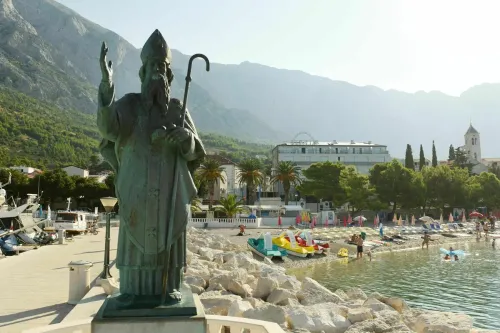
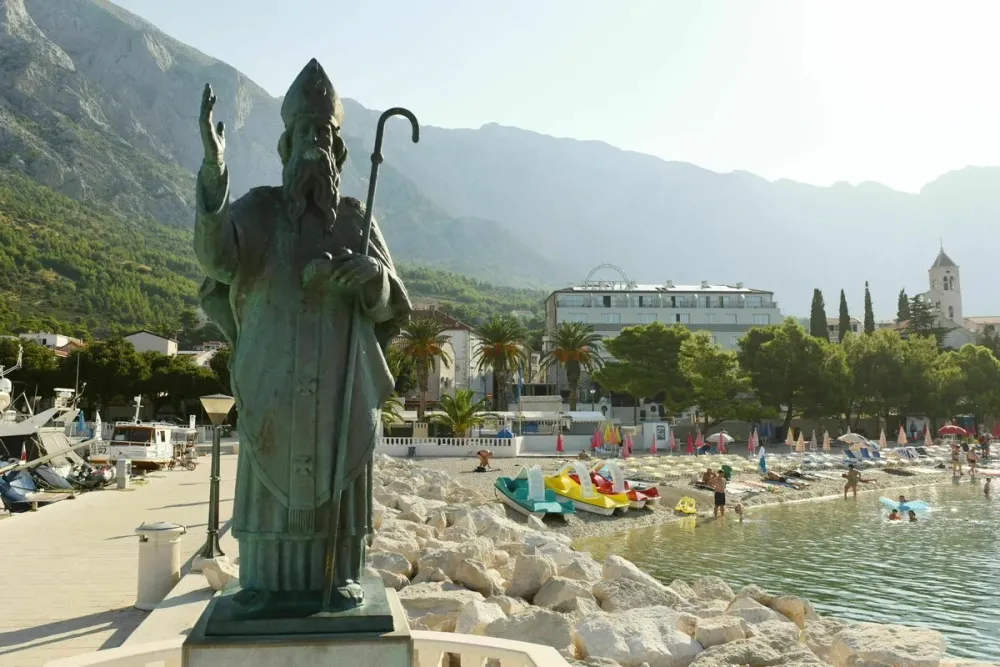
Radić won the 2025 election in Baška Voda, on Croatia's Makarska Riviera, as an independent supported by the Independent Youth List (NLM) and the Social Democrats (SDP). He defeated Joško Roščić of the HDZ, who had led the municipality for 32 years.
Akrap describes that breakthrough, about a year and a half ago, as the work of an alliance of Social Democrats, former party members and the small "The Three Bays" list. A bitter campaign and two repeat elections ended in what she regarded as a historic defeat for corruption involving millions, pervasive nepotism and secrecy.
But Radić rejoined the HDZ over the summer, returning to the party he had left in protest against its nepotistic structures. His father, Jure Radić, was a minister in Franjo Tuđman's government and one of the HDZ's founders. Roščić and Croatia's current prime minister also belong to the party, which faces nationwide criticism over corruption and cronyism.
For Akrap, the renewed party membership alone would not justify removing Radić. Her criticism concerns his actions in office: she writes that within months, he was making opaque, economically and legally questionable, anti-democratic decisions and granting favors to people close to the church and the HDZ.
Council vote splits the HDZ
By late September, a majority of municipal council members considered Radić unfit to continue and suspected that he might have committed criminal offenses, according to Akrap. On September 30, 2026, nine members of the 13-seat council voted to call a recall referendum, meeting the required two-thirds threshold.
Roščić returned to a council meeting for the first time in a year and a half to support the referendum against his successor. His party subsequently announced that it would expel him.
Three HDZ council members voted for the referendum. Afterward, the party's Split-Dalmatia county committee dissolved the Baška Voda municipal committee and appointed a commission to oversee the local party for six months. Marko Lozić, who had chaired the dissolved committee, was put in charge of the commission.
Radić is urging residents to boycott the referendum and spend the day with their families. Akrap sees the shifting affiliations and conduct of the two mayors as evidence that, despite the electoral change, they have proved interchangeable.
Serbia's result provides the comparison
Akrap draws a parallel with Serbia, where the opposition Student List defeated Aleksandar Vučić's bloc in the October 25, 2026, snap parliamentary election. Partial results put the Student List at about 52% of the vote and an absolute majority, while the Serbian Progressive Party (SNS) bloc received roughly 39–40%. Vučić conceded on election night, before official results were released.
With 56% of votes counted, election-monitoring group CeSID reported 139 seats for the Student List in the 250-seat National Assembly and 104 for Vučić's movement. It also reported three seats for the Hungarian party in Vojvodina and two for the Albanian minority party. Official final results were still pending.
Participation was the highest since Yugoslavia's breakup in 1992. Independent monitoring group CRTA recorded turnout of 67.8% by 7 p.m., compared with 58.8% in the 2023 general elections.
The Student List grew out of nearly two years of protests following the November 1, 2024, collapse of a railway station canopy in Novi Sad. Sixteen people died. The station had recently undergone renovation, and the disaster was widely attributed to corruption.
Vučić had shaped Serbian politics since 2012, serving as prime minister from 2014 to 2017 and then as president. He resigned the presidency in late September 2026 to lead the SNS election campaign. Outgoing Prime Minister Ana Brnabić became interim president, with a presidential election due in December 2026.
Another test at the ballot box
Akrap characterizes Serbia's result as a rejection of a predatory, morally decayed autocracy, comparable on a much larger scale to Baška Voda's earlier political breakthrough. Her argument is not that the Croatian reversal makes such victories futile, but that damaged institutions take longer to change than their leaders. People who once opposed corruption can themselves become corrupt, she writes, without making the entire democratic transition a lost cause.
The referendum will ask residents whether Radić should remain mayor. Under the procedure reported by Croatian media, a successful no-confidence vote would end his mandate within 48 hours and lead to a new mayoral election. Akrap's column identifies November 6 as Baška Voda's next test.