Musk among allies Trump says he would protect
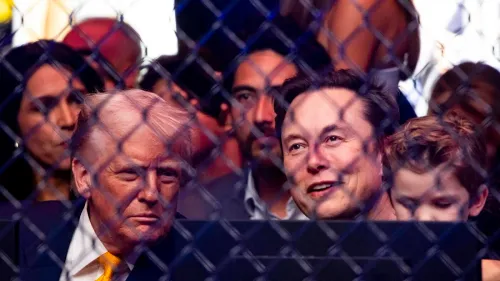
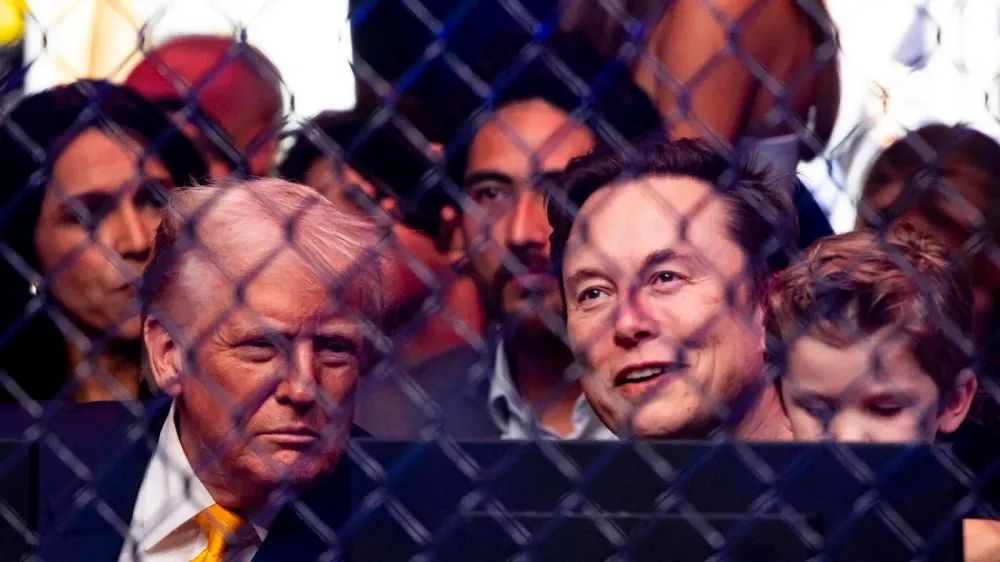
Host Miranda Devine raised former Trump adviser Elon Musk as an example of someone who might receive a pardon. Trump said he wanted to protect allies such as Musk, who had led efforts at the president's direction to dismiss thousands of employees across federal departments and agencies. The Daily Beast reported that Musk cut 250,000 government jobs while leading the Department of Government Efficiency, or DOGE.
Democrats plan to use congressional committees to investigate the administration if they win. They could compel administration officials and current and former staff members to appear at hearings, though they could not themselves initiate criminal investigations.
Potential House investigations could examine Musk's leadership of DOGE, his companies' lucrative federal contracts and his possible role in cutting Ukraine's access to Starlink, the satellite internet service operated by his company SpaceX, according to a USA TODAY report carried by the Miami Herald.
Musk has also spent heavily to support Republicans in the election. New York Times figures cited in the USA TODAY report put his contributions toward boosting Republicans in the 2026 midterm cycle at about $474 million, including $212 million to help Texas Republican Senate nominee Ken Paxton. He previously spent nearly $290 million to help Trump in the 2024 election.
Earlier pardon promises and grants
Trump cited his decision on the first day of his second term in January 2025 to pardon hundreds of supporters prosecuted over the 2021 Capitol attack. Across his second term, he has granted clemency to more than 1,700 people, most of whom faced charges related to January 6, 2021, according to USA TODAY. The report also said he had pardoned dozens of business figures convicted of white-collar crimes.
The Wall Street Journal reported in April that Trump had repeatedly promised senior administration officials pardons before leaving office. At one closed-door meeting, he reportedly said: "I'll pardon everyone who has come within 200 feet of the Oval [Office]."
Karoline Leavitt, then the White House press secretary, told the Journal that its reporters "should learn to take a joke" and said "the President's pardon power is absolute."
What preemptive pardons can cover
Legal experts cited by NPR draw a distinction between pardoning past conduct and shielding future actions. A president can pardon conduct that has already occurred, even before prosecutors learn about it, but cannot protect someone from prosecution for future conduct. Presidential pardons also do not shield recipients from state or local prosecution.
Preemptive pardons have a long history. NPR reported that the Justice Department's Office of the Pardon Attorney identifies several examples involving people who had not been charged: Gerald Ford's 1974 pardon of Richard Nixon after Watergate, Jimmy Carter's 1977 pardon of Vietnam draft dodgers and George H.W. Bush's 1992 pardon of former Defense Secretary Caspar Weinberger. The Supreme Court upheld broad preemptive pardon authority in Ex parte Garland in 1866.
Trump's Democratic predecessor, Joe Biden, also issued preemptive pardons to family members and staff near the end of his presidency, saying he feared they would face unjust, politically motivated prosecution. According to USA TODAY, those covered before he left office in January 2025 included former Rep. Liz Cheney, Adam Schiff and other members of the House Select Committee that investigated the January 6 attack; Dr. Anthony Fauci; Gen. Mark Milley; and Biden's son Hunter Biden and other relatives.
Vetoes and possible deals after the election
Trump also said he would veto legislation he opposed if Democrats won, while leaving room for negotiations should they secure majorities in both the House and Senate. He described a scenario in which repeated vetoes over a month or two would eventually bring Democrats to negotiate a deal.
The comments came ahead of the November 3, 2026, midterms. The Daily Beast reported that Democrats had opened a 9-point polling lead in the races for control of the House and Senate, while Trump's approval rating had reached an all-time low of 32%.
In the same podcast interview, Trump said he would love to run for a third term but acknowledged that "the language is very exacting," according to Axios. Discussing the time available to pursue his agenda, he said, "we have more than two years left."