Preliminary results give students a parliamentary majority
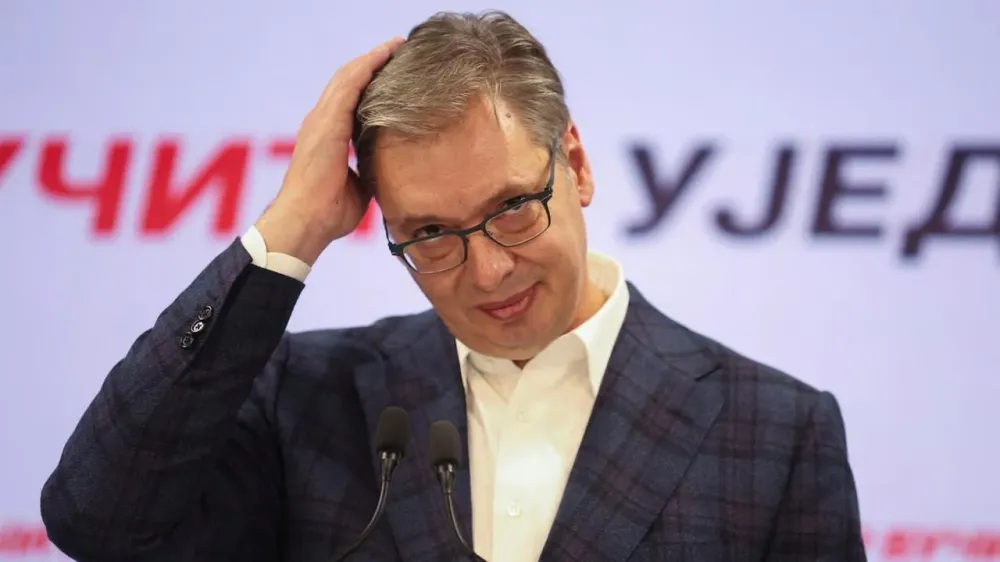
The student-backed list received just over 53% of the vote, compared with just over 39% for Vucic's Serbian Progressive Party (SNS). Turnout was a record 69%. Vucic conceded on the basis of projections, saying it was already clear his party had lost.
Two preliminary seat counts reported on October 26, 2026, put the Student List above the threshold for an outright majority in the 250-seat National Assembly. Balkan Insight, citing the Republic Electoral Commission and CeSID/Ipsos monitors, projected 140 seats for the Student List and 103 for the SNS list. Reuters reported 139 seats for the students and 97 for the SNS alliance, citing the State Election Commission with almost 99% of votes counted.
The SNS contested the election under the rebranded name "Aleksandar Vucic – United Serbia," according to Balkan Insight. Seats outside the two main lists were projected to go to national minority lists.
Balkan Insight's projections allocated three seats to the Alliance of Vojvodina Hungarians and two to the Albanian Coalition. Two Bosniak lists, "Rasim Ljajic – The People (SDP–CDP)" and "SDA Sandzak – Guardians of Sandzak," were each expected to take one seat.
As the results emerged, tens of thousands celebrated across Serbia. Crowds filled Belgrade's streets, bringing traffic to a standstill in parts of the capital.
A winning list without a designated prime minister
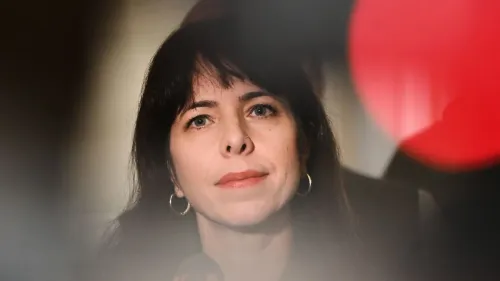
The Student List's victory leaves open who will lead the next government. Its lead candidate, Ilija Srdanovic, is a cardiologist and a professor at the Medical Faculty of Novi Sad University, according to Balkan Insight and DW. Heading the electoral list does not automatically make him the prospective prime minister, and the movement has not settled on personnel for a future administration.
On election night, Srdanovic said he was proud of citizens for decisively rejecting Vucic, whom he described as a tyrant. He expressed confidence that Serbia was moving toward a more civilized and better future.
Despite its name, the list includes almost no students. Most candidates are university teachers, doctors and artists, selected by a movement that operates without leadership bodies and makes decisions through grassroots assemblies. Its concise 11-point platform calls for restoring democracy and the rule of law and prosecuting corruption and crime.
Dejan Soskic, an economics professor at the University of Belgrade and former Serbian central bank chief, is among the prominent figures discussed for at least a ministerial position. He said a new government must be formed peacefully, lawfully and with stability as a priority. He ruled out revenge or revolution and identified establishing media freedom as an early task.
The constitutional timetable allows up to 90 days to form a government after parliament convenes, Reuters reported. Parliament is to convene following the state election commission's announcement of final results.
Vucic's bid to return as prime minister fails
Vucic, 56, resigned as president at the end of September with the aim of becoming prime minister if his party won. After years of dominating Serbian politics, he is now left with the role of opposition leader.
His presidential term would otherwise have ended in May 2027. Having served two terms, he cannot seek that office again. A presidential election is due in December 2026, with parliament speaker Ana Brnabić serving as caretaker president, the BBC reported on October 26.
The movement that defeated him grew out of protests following the collapse of a railway station canopy in Novi Sad, Serbia's second-largest city, two years ago. Sixteen people were killed. Critics attributed the disaster to corruption and negligence under Vucic's government.
Student demonstrations drew support from broad sections of society and developed into a movement against the government and widespread corruption. Hundreds of thousands attended rallies in Belgrade demanding early elections, in some of Serbia's largest protests since Slobodan Milosevic's fall in 2000.
Vucic's critics accuse him of weakening democracy and suppressing dissent and independent media.
EU offers cooperation as Moscow responds
Senior European Union officials congratulated the Student List and offered to work closely with it. In a joint statement on X, European Commission President Ursula von der Leyen and European Council President António Costa pledged support for reforms covering the rule of law, media freedom, anti-corruption efforts and democratic institutions, as well as cooperation to advance Serbia's EU membership bid.
European Commissioner for Enlargement Marta Kos said "a new chapter can begin for Serbia. The door to the EU is open, and we are ready to move forward together", the BBC reported.
Serbia became an EU membership candidate in 2012 and opened formal accession negotiations under Vucic in 2014. The previous leadership's policies have since left that process largely stalled, in part because of Vucic's close ties with Moscow.
Apart from Belarus, Serbia was the only European country not to adopt EU sanctions against Russia after Vladimir Putin launched the military attack on Ukraine in 2022. Russian agents and influencers can operate almost freely in Serbia. Propaganda media associated with Vucic's government disparaged the EU while presenting Russia and China favorably.
Hungarian Prime Minister Peter Magyar was among the first leaders to congratulate the Student List and promised Hungary's support in a Facebook post. His own election victory in April ended the 16-year rule of right-wing populist Viktor Orban, a close political ally of Vucic.
Kremlin spokesperson Dmitry Peskov praised Vucic's contribution to relations with Russia, according to the BBC. He expressed hope that the new political force in Belgrade would see cooperation with Moscow as being in Serbia's interests, adding that "it takes two to tango".